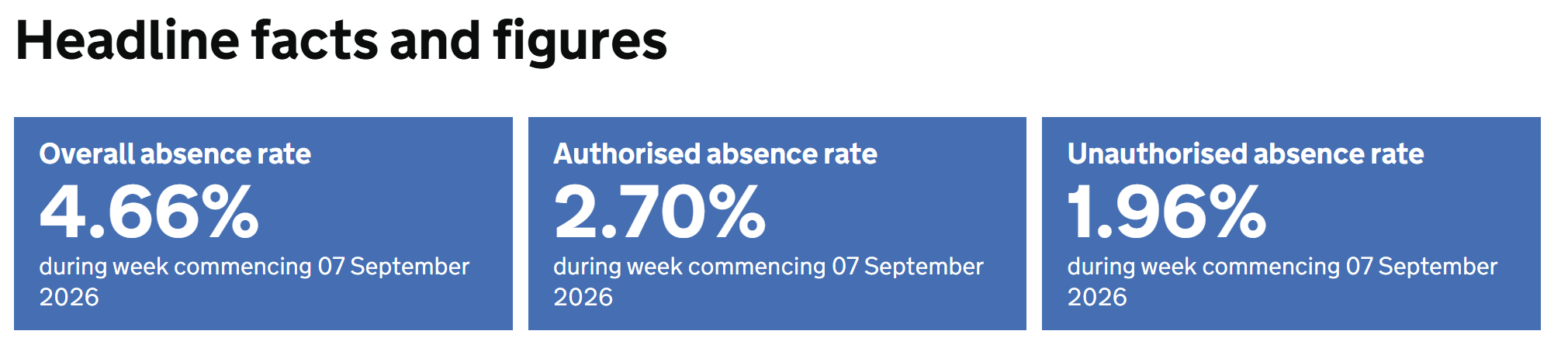
Strong school–family communication can improve attendance
What the research found
A new systematic review of 61 randomised controlled trials found that approaches which strengthen communication and engagement between schools and families have some of the strongest evidence for improving attendance. Simple approaches such as text messages, emails and structured parent engagement can make a difference.
What this means for schools
Attendance communication is not just an administrative process. The way schools communicate can either strengthen partnership or leave families feeling blamed and defensive.
What schools can do
Review the tone as well as the content of attendance messages. Keep expectations clear, but make communication collaborative and curious, particularly where relationships with families have become difficult.
Find out more:
https://www.rcpsych.ac.uk/news-and-features/latest-news/detail/2026/09/11/strong-school-family-communication-is-the-best-way-to-boost-attendance--new-review-finds
Everyday teacher communication matters for attendance and belonging
What the research found
New UCL research involving more than 1,000 young people and 600 secondary teachers found that 93% of young people said positive teacher communication made them more motivated to attend school, and 94% said it helped them learn. Young people particularly valued patience, fairness, respect and feeling listened to. One in three said experiences with teachers had contributed to them not wanting to attend, rising to 54% among pupils with SEND.
What this means for schools
Attendance is shaped by everyday relationships as well as policies and systems. Small interactions can contribute to whether pupils feel that they belong and want to be in school.
What schools can do
Build relational communication into attendance, behaviour and inclusion work. Seek pupil feedback about how interactions with adults feel, with particular curiosity about the experiences of pupils with SEND.
Find out more:
https://www.ucl.ac.uk/news/2026/sep/positive-teacher-communication-boosts-attendance-learning-and-motivation
The ‘reluctant leaver’: noticing staff before they decide they cannot stay
What the research found
Recent UK research suggests that many teachers who leave remain committed to teaching but reach a point where their working conditions no longer feel sustainable. Relational trust, feeling heard, opportunities for development and day-to-day working conditions all influence whether strain eventually becomes withdrawal or departure.
What this means for schools
Retention work needs to start long before somebody resigns. Reducing hours, stepping back from responsibility, disengaging from wider school life or becoming quieter can all be signs that someone is beginning to withdraw.
What schools can do
Create opportunities for staff to talk honestly about what is becoming difficult. Pay attention to early signs of withdrawal and ask not only, ‘Why do people leave?’ but ‘How would we know somebody who wanted to stay was slowly concluding that they couldn’t?’
Find out more:
https://journals.sagepub.com/doi/10.1177/17411432261485524
Staff wellbeing is also about the conditions people work in
What the research found
The same teacher-retention research highlights the importance of relational trust, feeling listened to, professional development and working conditions. Leadership cannot remove every external pressure, but it can influence whether staff experience difficulty as something they are carrying alone or something that can be thought about together.
What this means for schools
Wellbeing should not rest solely on helping individual staff become more resilient. Workload, role clarity, professional autonomy, relationships and opportunities for reflection all shape whether work feels sustainable.
What schools can do
Ask staff where they feel supported and where they feel they simply have to cope. Review workload and role expectations, and consider protected reflective spaces or supervision for staff carrying significant emotional or decision-making responsibility.
Find out more:
https://journals.sagepub.com/doi/10.1177/17411432261485524
New retention toolkit: building cultures that help staff stay
What’s new
Education Support has published Cultures that Care, a practical school staff retention toolkit designed to help leaders think about wellbeing and retention through whole-school culture rather than isolated wellbeing initiatives.
The toolkit focuses on the organisational conditions that support people to stay and thrive, including relationships, leadership, workload, inclusion and staff experience.
What this means for schools
Retention is rarely solved by a single initiative. Staff are more likely to stay where they feel valued, heard, supported and able to do their work sustainably.
What schools can do
Use the toolkit with SLT or governors to reflect on the culture staff actually experience. Look particularly at the gap between what the school says about staff wellbeing and what happens when somebody is struggling, overloaded or considering leaving.
Find out more:
https://www.educationsupport.org.uk/resources/for-organisations/guides/cultures-that-care-a-retention-toolkit-for-schools/